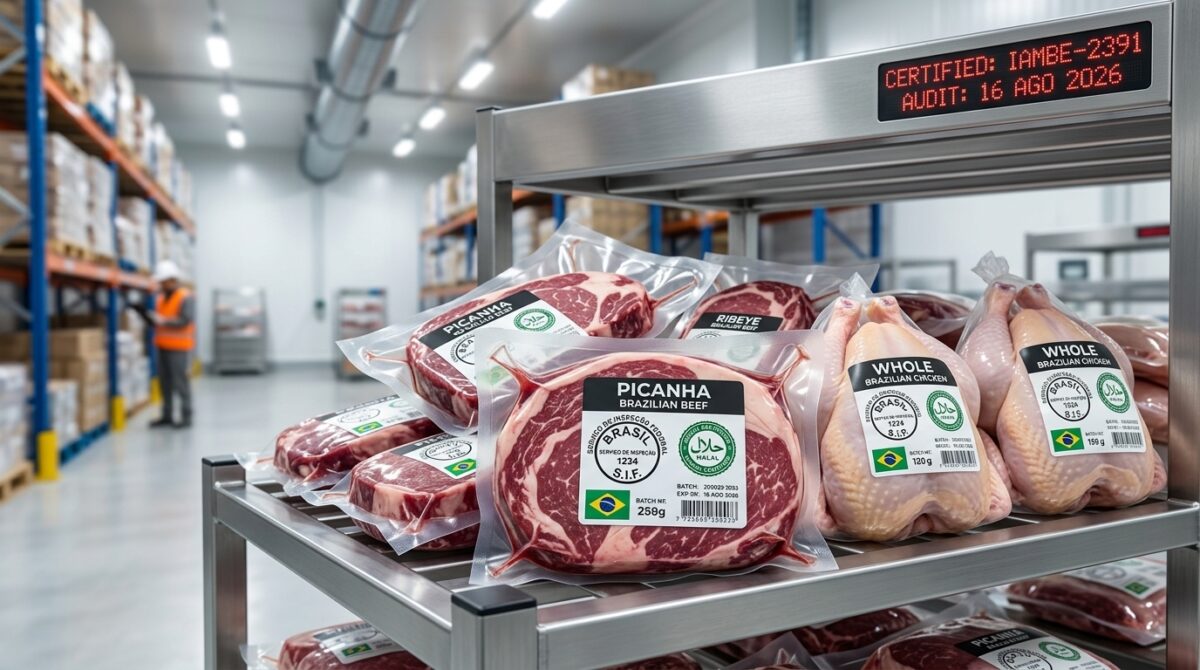

Brazilian Halal Chicken: Why the Gulf and Southeast Asia Depend on Brazil in 2026
August 10, 2026
How Halal Certification Actually Works in Brazil: A Buyer’s Due Diligence Guide
August 16, 2026
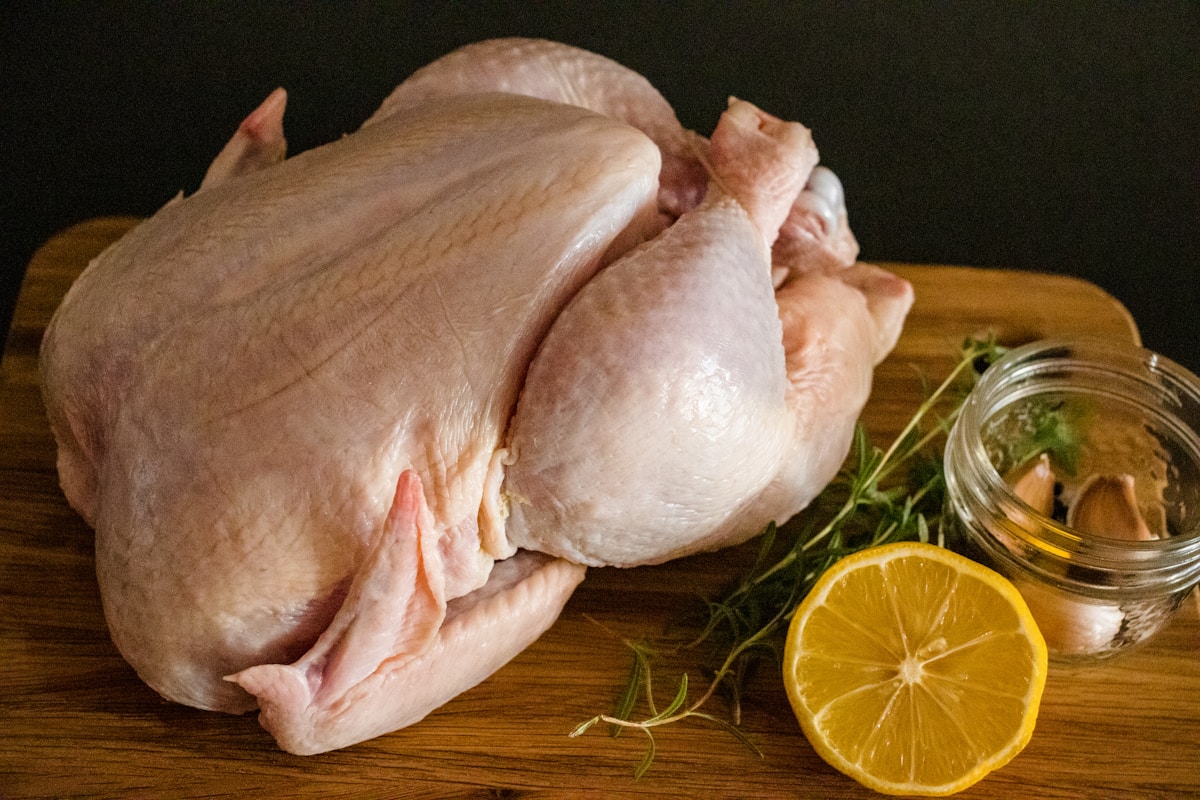
Not every chicken cut sells the same way in every market. Brazil exported 2.936 million tonnes of chicken meat in the first half of 2026 alone — up 12.9% year-on-year — but that volume is not uniform product moving to uniform destinations. Leg quarters, breast, and wings each follow distinct demand patterns shaped by regional diets, price sensitivity, and foodservice trends. For importers building a sourcing program, matching the right cut to the right market is as important as securing the volume itself.
Leg Quarters: The Volume Workhorse for Africa, the Middle East, and Asia
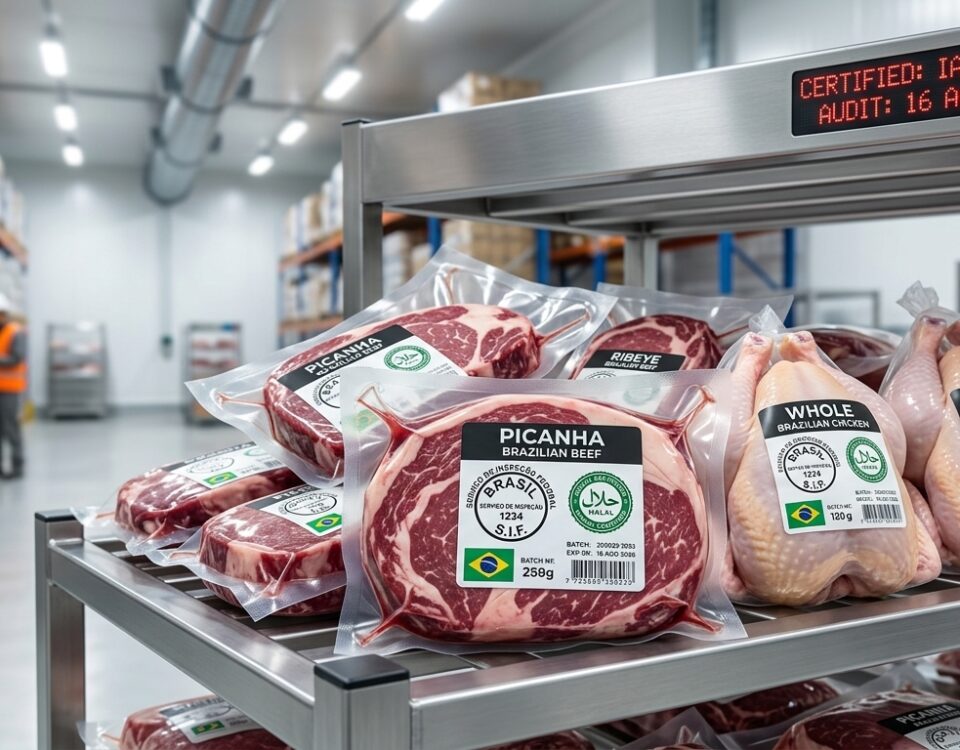
Chicken leg quarters carry consistently high demand across Africa, the Middle East, and Asia, where dark meat is culturally preferred and price-per-kilo economics favor larger-format cuts for retail and foodservice. This is also where Brazil’s Halal-certified supply chain matters most directly — leg quarters moving into Gulf markets typically travel through the same certified processing lines supplying whole birds and other Halal cuts, simplifying supplier consolidation for buyers who need both.
Breast: Where Lean Protein Meets Premium Positioning
Chicken breast follows a different trade logic entirely. Brazil, Thailand, and the United States lead global breast meat exports, supplying primarily the EU, Japan, the UK, and premium domestic retail segments where consumers prioritize lean, white meat protein. Breast meat commands different specification requirements — tighter size grading, specific trim standards, and in many cases IQF (individually quick frozen) processing — reflecting its position in higher-value retail and foodservice channels rather than bulk commodity trade.
Wings: A Cut That Serves Two Markets at Once
Wings occupy an unusual dual position in global trade. In developed markets, they function as a premium foodservice item — driven by wing-focused restaurant chains and sports-bar menus — commanding pricing closer to specialty cuts than commodity protein. In developing markets, wings remain an accessible, affordably priced cut for retail and street food. This dual demand profile means wing pricing can behave differently from other cuts depending on which market segment is absorbing a given shipment.
Where Brazil’s 2026 Growth Is Concentrated
In June 2026, China led single-month destinations at 50,100 tonnes, followed by Japan at 46,600 tonnes, the UAE at 46,200 tonnes, and Saudi Arabia at 33,100 tonnes. Over the full first half of 2026, the UAE overtook China as Brazil’s top overall destination, with growth also broadening into Japan, the EU, and South Korea — markets that typically demand higher-spec, higher-value cuts rather than bulk leg quarters alone. For buyers, this diversification signals that Brazilian suppliers are increasingly equipped to serve differentiated cut specifications, not just high-volume commodity orders.
Matching Cuts to Buyer Profile
- Retail and foodservice distributors in the Gulf and Africa typically prioritize leg quarters for value-driven, high-volume programs, often paired with Halal whole birds from the same supplier.
- EU, Japan, and premium retail buyers generally source breast meat under tighter specification and grading requirements, reflecting higher per-unit value and quality expectations.
- Foodservice chains and developing-market retailers often source wings specifically, sometimes as a standalone product line separate from broader poultry programs.
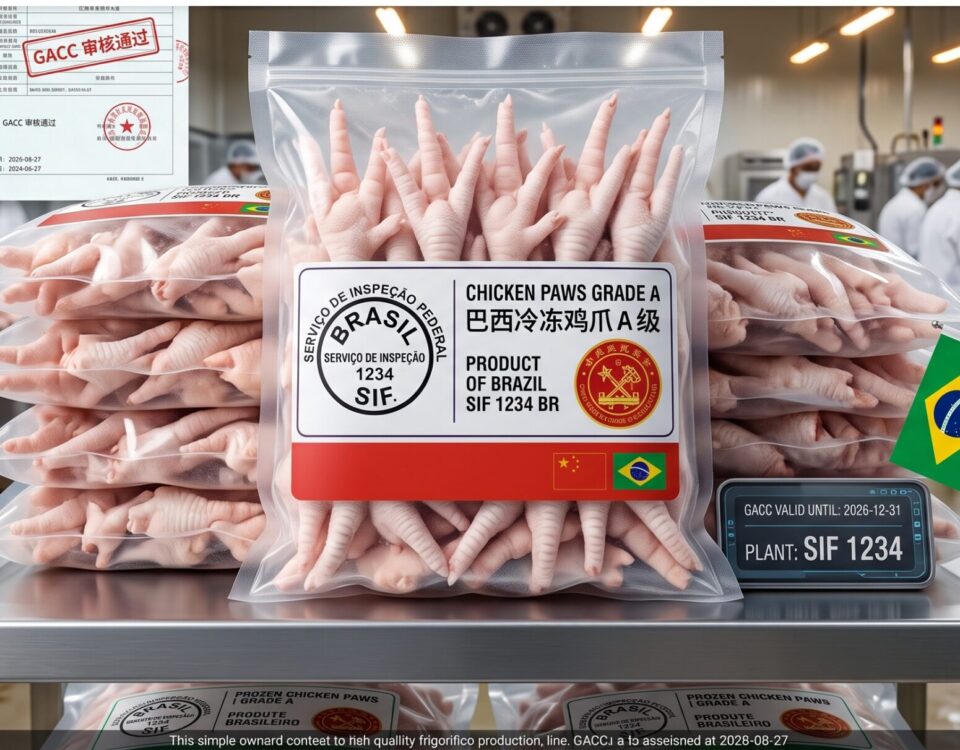
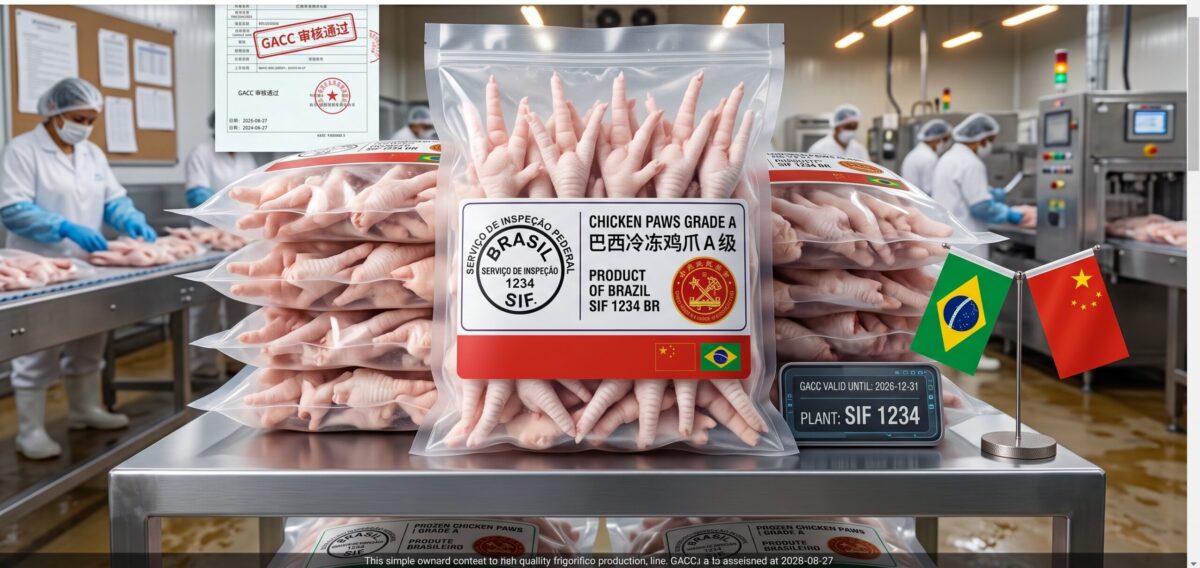
For buyers sourcing chicken feet or paws specifically, AgriTrade Connect has a dedicated guide covering Grade A, SIF and GACC-certified paws — a separate specification track from the whole-bird cuts covered here.
Key Specifications by Cut
| Cut | Typical Grade | Primary Destinations | Packaging |
|---|---|---|---|
| Leg Quarters | Grade A, bulk or retail pack | Middle East, Africa, Asia | 20kg cartons or bulk |
| Breast | IQF, tight size grading | EU, Japan, UK, premium retail | IQF cartons, vacuum-sealed |
| Wings | Grade A, whole or split | Global — foodservice & retail | 10-20kg cartons |
Conclusion
Brazil’s 2026 export growth is not just about shipping more chicken — it’s about shipping the right cut to the right buyer. Leg quarters remain the volume anchor for the Middle East, Africa, and Asia, breast meat serves premium and EU-driven demand, and wings straddle both premium foodservice and accessible retail simultaneously. Buyers who specify cuts clearly — rather than defaulting to generic “chicken” orders — typically secure better pricing alignment and more consistent supply matching.
Sourcing Brazilian Chicken Cuts?
AgriTrade Connect, in partnership with Amige International, supplies leg quarters, breast, wings, and Halal whole birds from SIF-certified Brazilian processors — matched to your market’s specification requirements.
📧 gabriel.dias@agritradeconnect.com
📱 WhatsApp: +55 17 99735-4202
🌐 agritradeconnect.com
Sources
| Source | Publication | Date |
|---|---|---|
| Brazil’s Chicken Exports Hit Record High in First Half of 2026 | The Poultry Site | July 2026 |
| Brazil Sets Record for Chicken Exports in First Four Months of 2026 | The Poultry Site | May 2026 |
| Brazil Chicken Exports 2026: Record $5.7bn First Half | Rio Times Online | 2026 |
| What Chicken Cuts Are Most Commonly Imported? | Brazil Frosty Foods | 2026 |
| Chicken Cuts for Wholesale Buyers — Top 7 Brazilian Poultry Parts | Worldwide Chicken Trade | 2026 |