Brazilian Arabica vs. Ethiopian and Colombian Origin: What Roasters Choose and Why
July 17, 2026
Chicken Leg Quarters, Breast & Wings: A Buyer’s Guide to Matching Cuts to Your Market
August 13, 2026
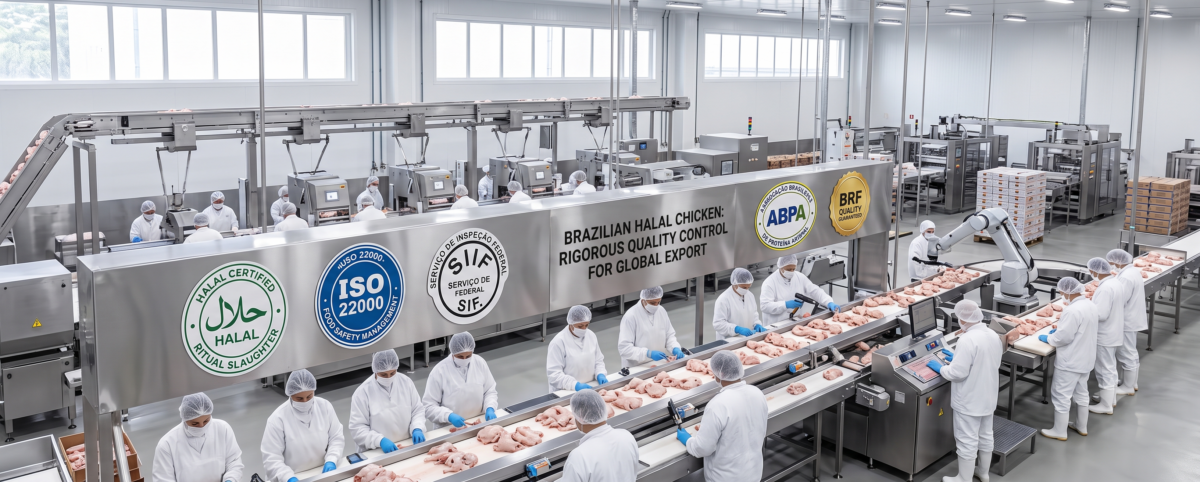
Brazil shipped its first commercial chicken export exactly 50 years ago, on August 1, 1975 — a single shipment to Kuwait. Half a century later, that relationship has grown into a structural dependency: Brazil is now the world’s largest halal chicken exporter, shipping more than 2 million metric tons annually, with over 40% of its total poultry exports certified Halal. For importers across the Gulf and Southeast Asia, understanding how this position was built — and why it continues to hold — is directly relevant to long-term sourcing strategy.
A 50-Year Trajectory Built on Early Market Access
Brazil’s poultry export industry did not start as a Halal-focused business. The turning point came in the late 1980s and early 1990s, when Brazilian exporters recognized that meeting specific Halal requirements could significantly expand market access beyond domestic and regional buyers. Early certification efforts, including work by the Islamic Center of Brazil (CDIAL) starting in the mid-1990s, gave Brazilian processors a multi-decade head start on building audited, scalable Halal supply chains — well before Halal certification became a competitive standard across the global poultry trade.
Current Scale: What Brazil Ships Today
According to ABPA (Brazilian Animal Protein Association) data, Brazil’s poultry production is forecast to reach a record 15.7 million tons in 2026, with approximately 5.1 million tons exported — a year-on-year increase of roughly 2%. Halal-certified product accounts for more than 40% of that export volume, making Brazil the single largest halal chicken supplier in the global market.
Where Gulf Demand Concentrates
The Gulf remains Brazil’s anchor Halal market. In 2025, the United Arab Emirates was Brazil’s single largest chicken destination at 479,900 tonnes, followed by Saudi Arabia at 397,200 tonnes. In the first two months of 2026 alone, the UAE, Saudi Arabia, and Qatar together absorbed more than one-fifth of Brazil’s containerized poultry exports — a concentration that reflects decades of established trade relationships rather than a recent shift.
Notably, Brazilian chicken exports continued rising even through regional Middle East supply disruptions in early 2026, with shipments up 6% in March despite broader crisis conditions — a signal of how deeply integrated Brazilian supply chains are into Gulf import infrastructure.
Southeast Asia’s Growing Role
Halal certification gives Brazil a distinct competitive edge in Southeast Asia as well, where it aligns directly with consumer preference and religious requirement in markets like Indonesia and Malaysia. Japan and China have also emerged as significant volume destinations — Japan importing 42,100 tonnes and China 51,800 tonnes in early 2026 reporting periods — reflecting Brazil’s broadening footprint across Asia beyond its traditional Gulf base.
What This Means for Buyers
- Scale reduces single-shipment risk. With over 2 million tons of Halal-certified volume shipped annually, buyers are sourcing from a supply base built for consistent, large-scale delivery — not a niche or emerging Halal program.
- Certification depth is a genuine differentiator. Brazil’s Halal infrastructure has three decades of audited operating history, reducing compliance and onboarding risk relative to newer entrant origins.
- Diversified demand supports supply resilience. Brazil’s poultry exports now span the Gulf, Southeast Asia, and East Asia simultaneously, helping stabilize export flows even when any single region faces disruption.
Key Specifications for Sourcing
| Specification | Standard |
|---|---|
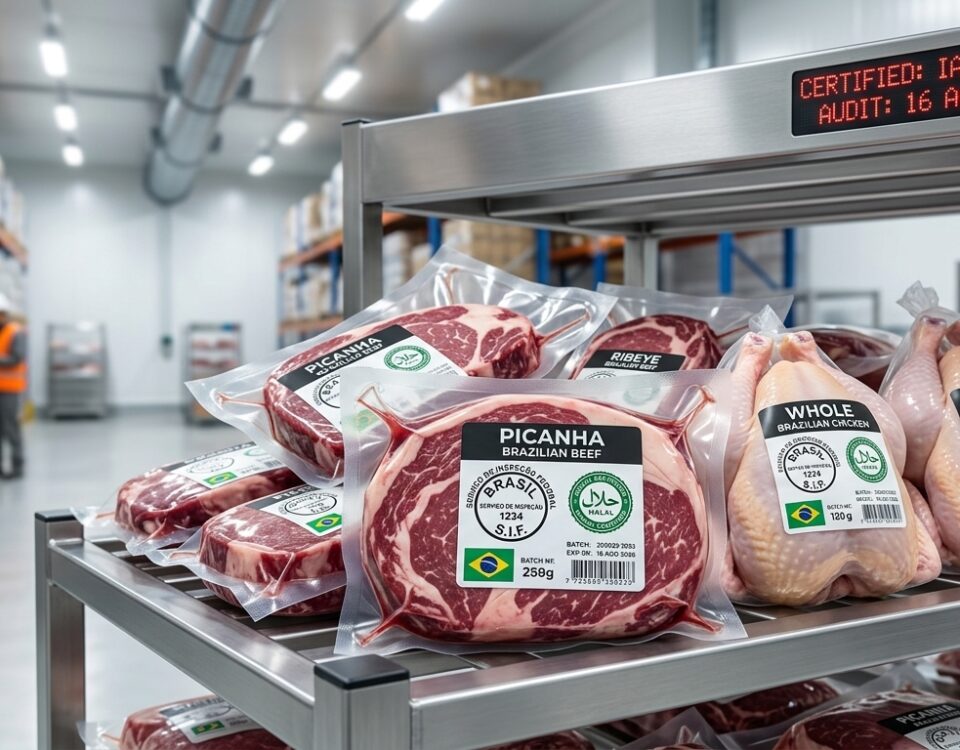
| Certification | Halal (SIF Brazil + Halal-certifying body) |
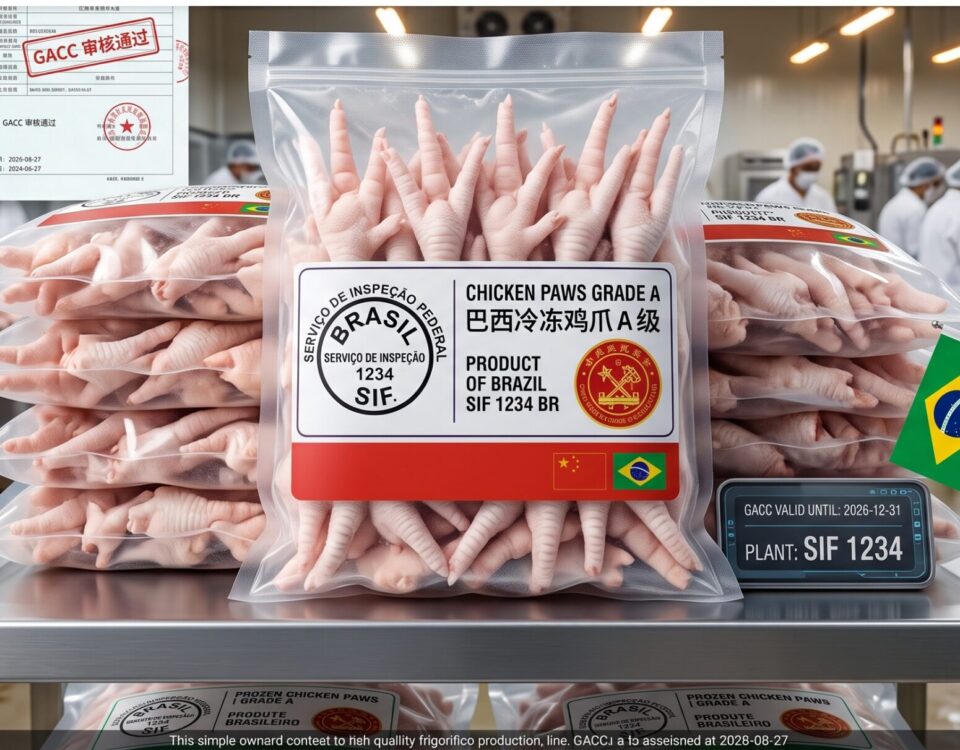
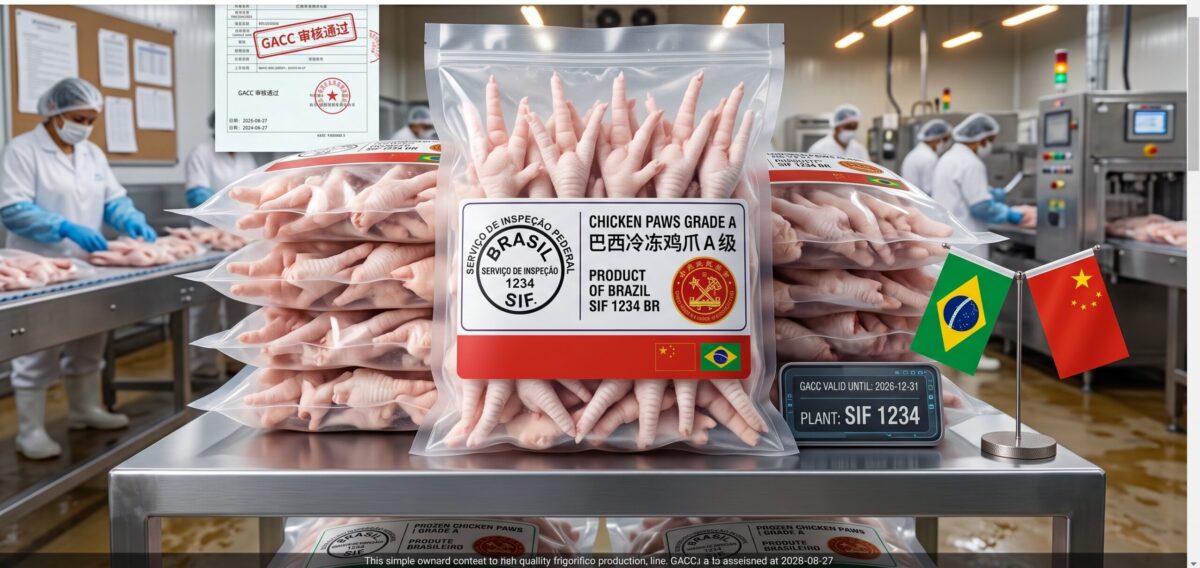
| Product types | Whole birds, cuts, paws, processed |
| Packaging | Cartons, bulk, or client specification |
| Incoterms | FOB Santos/Paranaguá or CIF to destination |
| Payment | LC at sight, DLC, or SBLC |
| Minimum order | Typically 5 × 40HQ reefer containers (MOQ) |
Conclusion
Fifty years after its first export shipment, Brazil’s position as the world’s leading Halal chicken supplier is the result of sustained investment in certification infrastructure, not a recent response to demand. For Gulf and Southeast Asian importers, that history translates into a more predictable, audit-ready supply base — one built to absorb regional disruption without breaking delivery commitments.
Sourcing Brazilian Halal Chicken?
AgriTrade Connect, in partnership with Amige International, connects Gulf and Asian importers with SIF-certified, Halal-verified Brazilian poultry suppliers — structured transactions from LOI through shipment documentation.
📧 gabriel.dias@agritradeconnect.com
📱 WhatsApp: +55 17 99735-4202
🌐 agritradeconnect.com
Sources
| Source | Publication | Date |
|---|---|---|
| ABPA — Brazilian Animal Protein Association Export Data | The Poultry Site | 2026 |
| Brazil Marks 50 Years as Top Global Chicken Exporter | The Poultry Site | August 2025 |
| Halal Meat Accounts for 40% of Brazilian Poultry Exports | Poultry World | 2025 |
| Brazil’s Chicken Exports Rise 6% in March Despite Middle East Crisis | The Poultry Site | May 2026 |
| Gulfood 2026 — ABPA/ApexBrasil Export Projections | ESS Feed | 2026 |