
Chicken Leg Quarters, Breast & Wings: A Buyer’s Guide to Matching Cuts to Your Market
August 13, 2026
GACC Registration for Chicken Paws Exporters: What Chinese Buyers Ask First
August 27, 2026
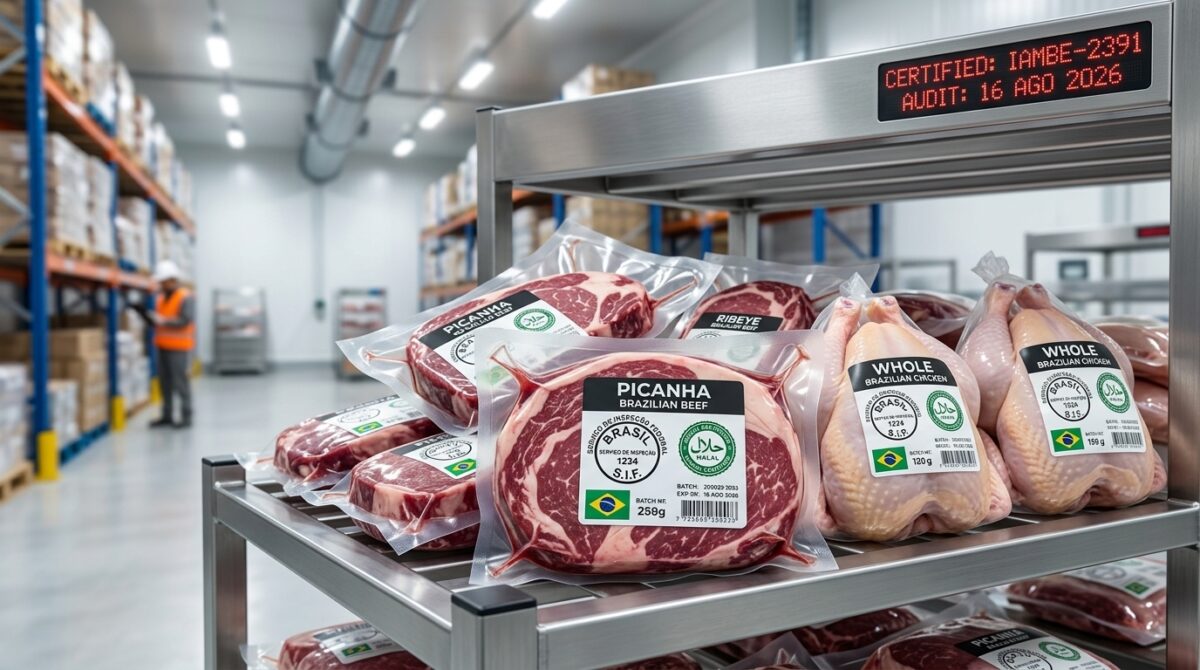
For Gulf and Asian importers evaluating a new Brazilian supplier, one question comes up before pricing or logistics: how is Halal certification actually verified, and how do we know it holds up to audit? Brazil’s Halal system is built on decades-old certification infrastructure — not a recent compliance add-on — and understanding how it works helps buyers assess supplier risk before signing a contract.
Two Certifying Bodies, One Recognized Standard
Two organizations issue the large majority of Halal certification in Brazil: CDIAL (Centro de Divulgação do Islam para a América Latina) and FAMBRAS (Federação das Associações Muçulmanas do Brasil). Both are internationally recognized certifying bodies with decades of operating history, audited against standards accepted by major importing markets across the Gulf and Southeast Asia. For buyers, working with a supplier certified by either body means the certification is traceable to an established, internationally accepted audit chain — not a self-issued or unverifiable claim.
How the Certification Process Works
Certification follows a structured, multi-phase process rather than a single inspection. A typical certification cycle includes an initial document analysis, a Phase 2 facility audit against a formal audit plan — covering certification scope, category, standards, and audit team assignment — followed by ongoing maintenance audits and periodic recertification. This means Halal status is not a one-time badge: certified facilities are subject to continued verification throughout the certification period, not just at initial approval.
What Happens on the Slaughter Line
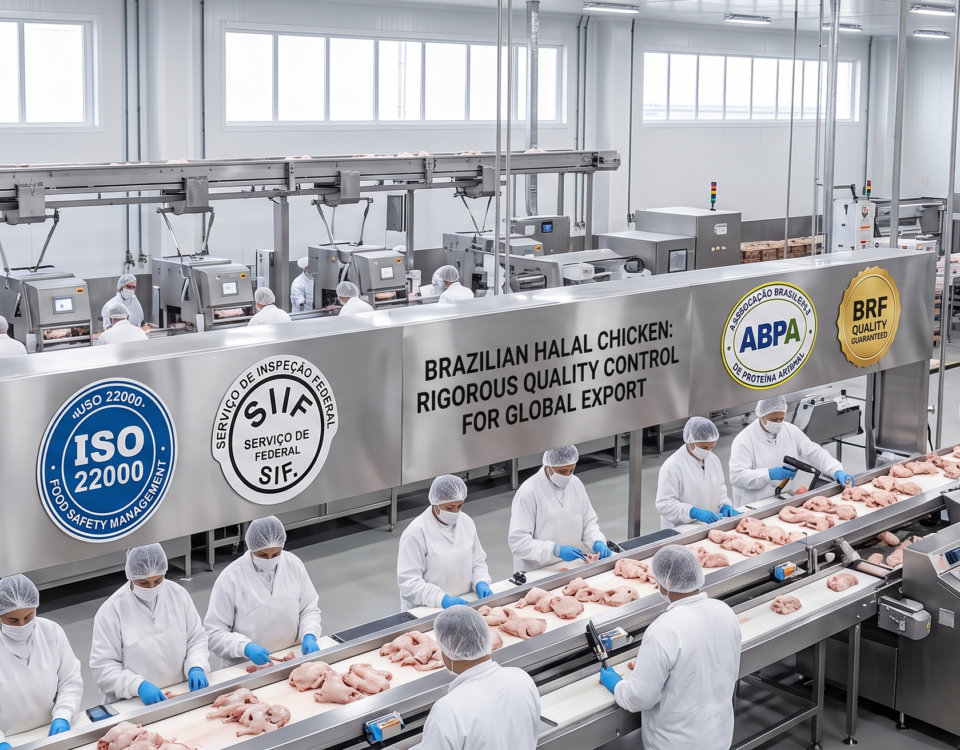
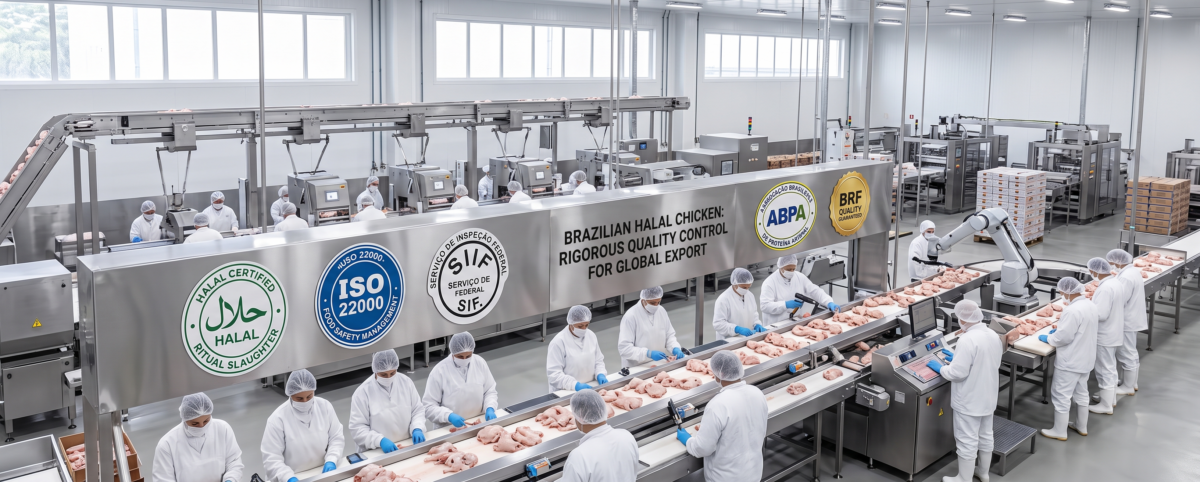
The technical requirements are specific and non-negotiable under both CDIAL and FAMBRAS schemes. The animal must be alive and healthy at the time of slaughter. Slaughter must be performed by a Muslim who recites the tasmiyah (invocation of Allah’s name). The method must sever the trachea, esophagus, and major blood vessels in the neck, and blood must be fully drained from the carcass. These requirements apply consistently across certified poultry and beef processing facilities in Brazil.
Facility Segregation: The Detail Buyers Often Miss
Beyond the slaughter method itself, certified facilities must maintain complete segregation from any non-Halal production lines — separate equipment, separate storage facilities, and in many cases dedicated staff and processing schedules to prevent cross-contamination. This segregation requirement is one of the more resource-intensive parts of certification, and it’s a useful due-diligence question for buyers to ask directly: does the supplier run a dedicated Halal line, or shared equipment with time-based separation? Both can be compliant, but the audit trail differs.
Why This Reduces Risk for Buyers
- Independent audit chain. Certification isn’t self-declared — it’s issued and periodically re-verified by CDIAL or FAMBRAS against documented technical schemes.
- Traceable documentation. Buyers can request certificate numbers and audit scope documentation tied to a specific processing facility, not just a general company claim.
- Maintenance audits catch drift. Because certification includes ongoing maintenance phases, facilities can’t simply pass an initial audit and stop meeting the standard — non-compliance risks suspension.
Practical Due Diligence for Importers
Before finalizing a supplier relationship, buyers should request the current certificate, confirm which body issued it (CDIAL or FAMBRAS), verify the certificate’s scope matches the specific product and facility being sourced from, and confirm the certificate is within its active validity period. A supplier willing to provide this documentation promptly is generally a stronger signal of compliance maturity than pricing alone.
Key Facts
| Item | Detail |
|---|---|
| Main certifying bodies | CDIAL, FAMBRAS |
| Certification phases | Document analysis, facility audit, maintenance, recertification |
| Slaughter requirement | Muslim slaughterer, tasmiyah, full blood drainage |
| Facility requirement | Segregated equipment and storage from non-Halal lines |
| Buyer verification | Certificate number, scope, facility match, validity date |
Conclusion
Brazil’s Halal certification system is built on independent audit bodies, documented technical schemes, and ongoing maintenance verification — not a one-time compliance checkbox. For Gulf and Asian buyers, understanding this structure turns Halal certification from a label to check into a due-diligence tool: a real basis for evaluating supplier risk before committing to a contract.
Sourcing Certified Halal Product from Brazil?
AgriTrade Connect works in partnership with Amige International, the Halal-certification mandate holder, to connect importers with audited, CDIAL/FAMBRAS-certified Brazilian suppliers — with full certificate documentation provided before contract.
📧 gabriel.dias@agritradeconnect.com
📱 WhatsApp: +55 17 99735-4202
🌐 agritradeconnect.com
Sources
| Source | Publication | Date |
|---|---|---|
| CDIAL Halal — Technical Scheme for Poultry Slaughter (SMI 001) | CDIAL Halal | 2024/2025 |
| The Development of Halal Certification in Brazil | ISA Halal | 2026 |
| How Halal Certification Works in Brazil: A Step-by-Step Process | Brazil Halal Chicken | 2026 |
| Brazil Halal Certification Process: The Global Gold Standard | Brazil Poultry Exports | 2026 |