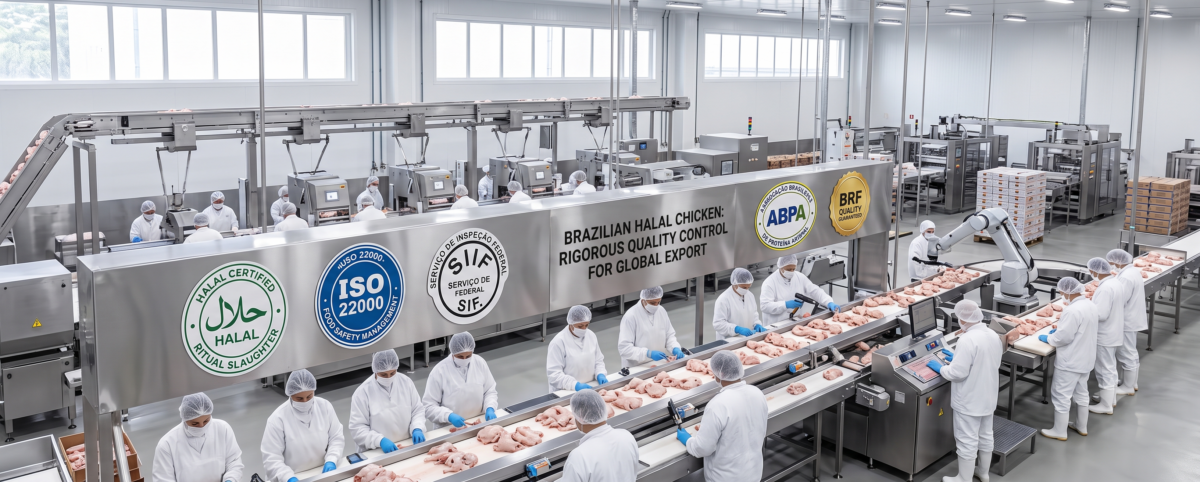

Agricultural Spray Oil Market 2026: Why Brazil and Latin America Are Central to Global Supply
July 6, 2026
Sourcing Sugar ICUMSA 45 for the Middle East in 2026: Market Data and Timing Strategy
July 10, 2026
Introduction
Brazilian chicken meat exports totaled 1.943 million tons in the first four months of 2026, up 4.3% from the same period in 2025, according to the Brazilian Association of Animal Protein (ABPA). In value terms, exports rose 6.1% to US$3.704 billion — a record pace even as Middle East shipping routes faced significant disruption from regional conflict.
For procurement teams sourcing frozen chicken and by-products like chicken paws, this combination of record volume and logistical rerouting is worth understanding in detail — because it reveals both where supply is concentrating and where near-term risk sits.
What Happened: Record Exports Amid Regional Disruption
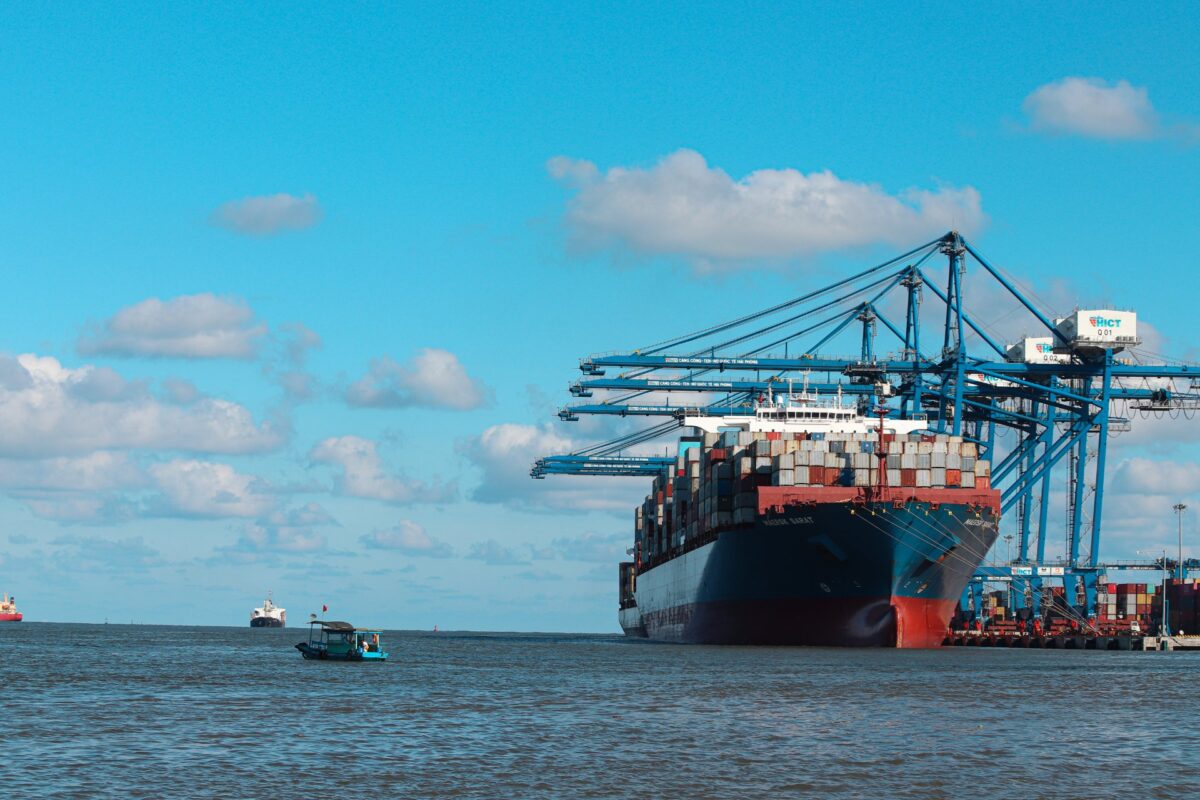
Disruptions to shipping through the Strait of Hormuz in early 2026 left vessels waiting offshore, forced rerouting, and triggered war-risk surcharges from major carriers, according to S&P Global’s Platts reporting. Refrigerated cargo — the category chicken and beef exports depend on — was particularly exposed, with extended waiting times sharply increasing operational costs for exporters.
Despite this, Brazil’s poultry sector maintained its export pace. ABPA President Ricardo Santin noted that even amid regional conflict, the sector was able to meet Gulf demand and support food security in the region — a signal that Brazilian supply chains have built enough redundancy to absorb significant disruption without collapsing volumes.
Why It Happened: The Saudi Arabia Rerouting Pattern
One of the more revealing data points from this period: Brazil exported 35,800 metric tons of chicken to Saudi Arabia in April 2026 alone, up 5.2% year-on-year, making the Kingdom the third-largest destination behind China and Japan for that month.
The reason is structural rerouting. According to ABPA data, shipments originally bound for other Gulf destinations were redirected through Saudi Arabia as exporters worked around regional shipping constraints. The Middle East as a whole accounts for roughly 30% of Brazil’s total chicken exports — with Saudi Arabia sourcing about half of its chicken needs from Brazil, and the UAE sourcing approximately 74%, according to ABPA President Ricardo Santin.
This concentration means Gulf buyers are not simply one of several options for Brazilian exporters — they are a structurally central market that Brazilian supply chains are actively protecting, even under difficult logistics conditions.
Who Is Impacted: Exporters, Freight Carriers, and Buyers
Three groups are navigating this dynamic differently:
Exporters are absorbing higher freight costs from rerouting via the Cape of Good Hope — a longer but safer alternative route — while working to maintain contracted delivery windows.
Freight carriers like CMA CGM have reopened booking for the Middle East using what the company describes as “multimodal solutions,” combining alternative Red Sea and Gulf of Oman ports with bonded land bridge routing to reach markets including Saudi Arabia, the UAE, Kuwait, Qatar, and Bahrain.
Buyers in Gulf markets are seeing some price movement as a result. Platts assessed CIF Middle East chicken breast prices at US$2,550 per metric ton in mid-March 2026, up US$150/mt day-over-day during peak disruption — though prices have since stabilized as rerouting solutions matured.
What This Means for Importers
For procurement teams in China, Vietnam, Angola, Saudi Arabia, and Malaysia, three practical takeaways emerge from this data:
- Brazilian supply reliability is proving resilient, even under geopolitical stress. Buyers building long-term sourcing relationships with Brazilian exporters are seeing that supply commitments are being honored despite added freight cost and complexity.
- Freight cost volatility, not product availability, is the near-term risk. Buyers negotiating new contracts should factor in potential freight premium clauses or discuss CIF pricing structures that account for rerouting scenarios.
- Saudi Arabia’s growing role as a regional redistribution point may create opportunities for buyers in adjacent Gulf markets to explore alternative logistics arrangements routed through Saudi ports.
Key Specifications for Sourcing Brazilian Chicken
| Specification | Standard |
|---|---|
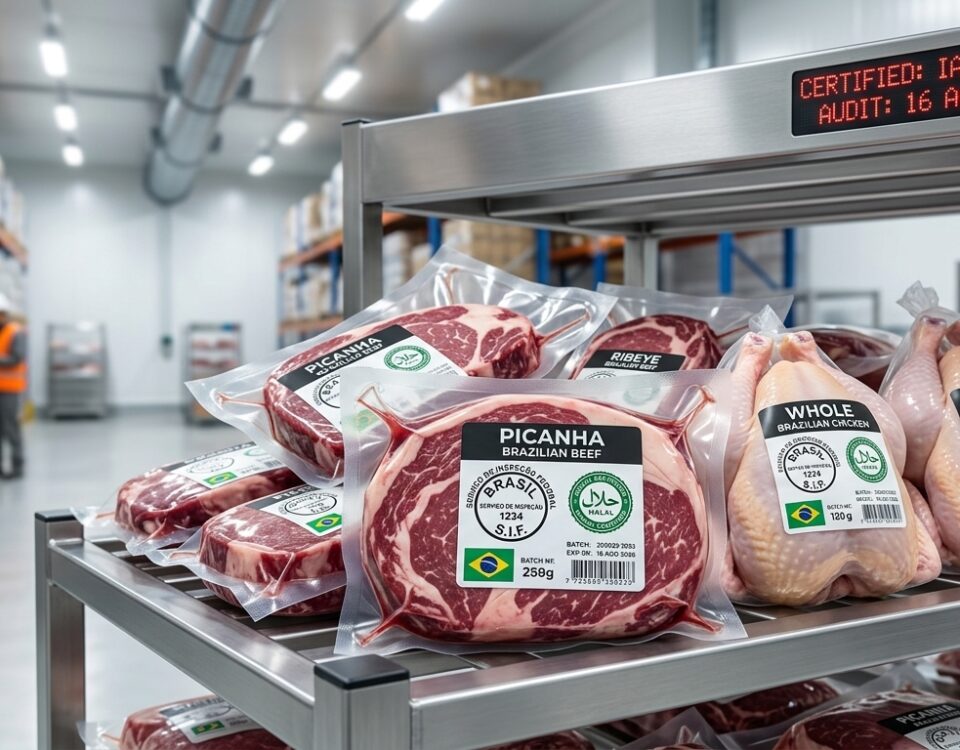
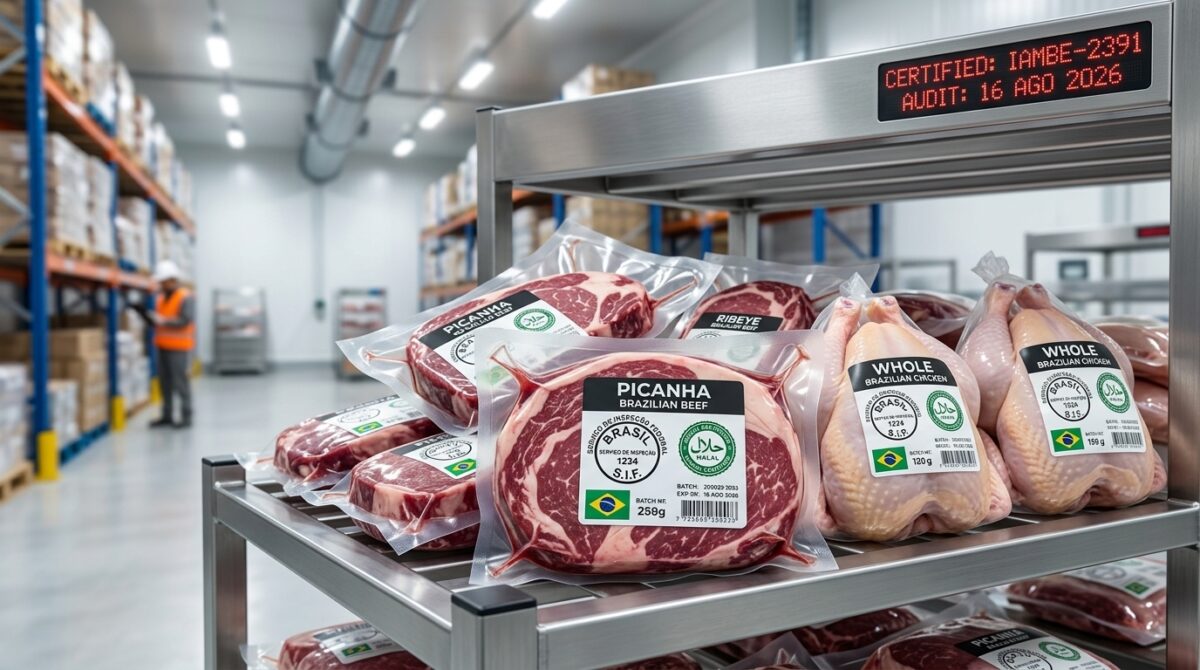
| Certification | SIF Brazil + GACC (China) + Halal (Gulf/Asia) |
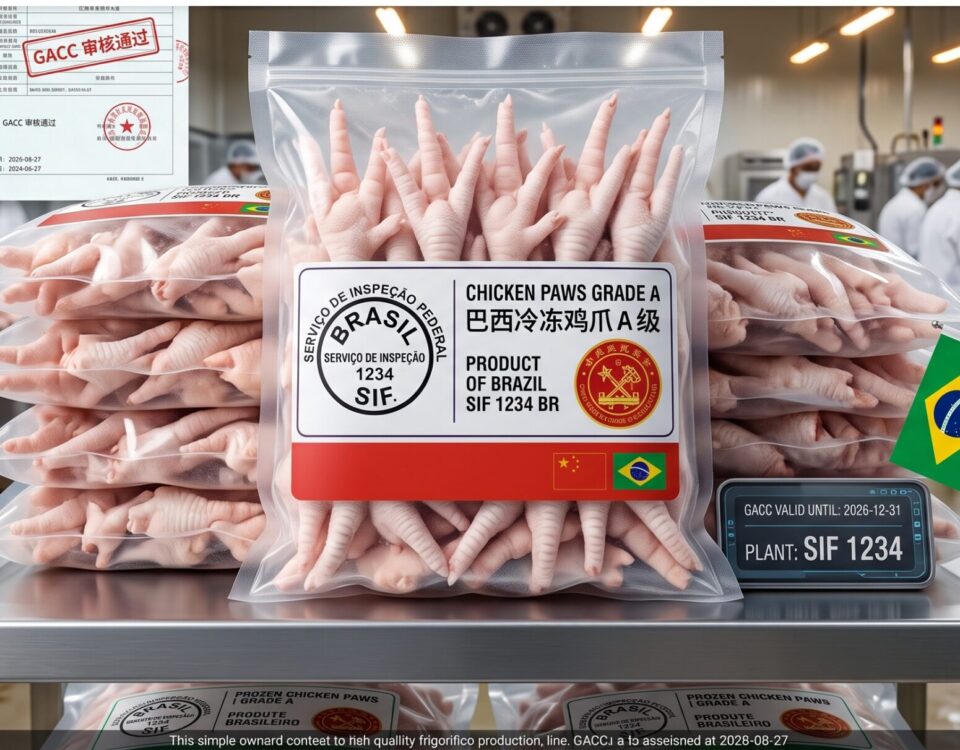
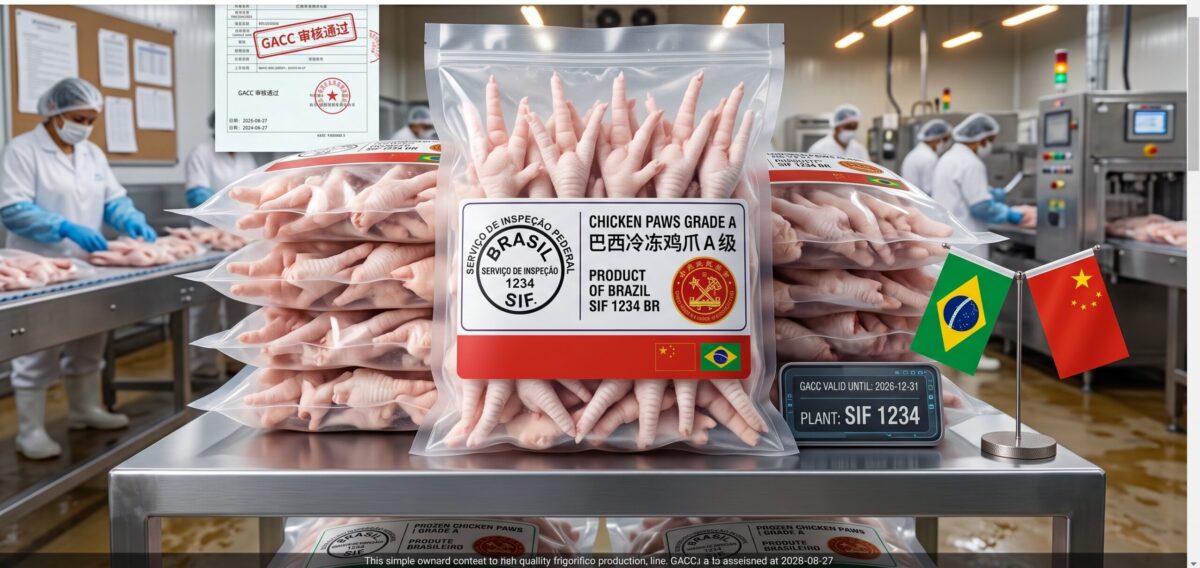
| Common products | Whole chicken, cuts, chicken paws (HS 0207.14) |
| Grade | Grade A — SIF export standard |
| Incoterms | FOB Santos/Paranaguá or CIF to destination |
| Payment | LC at sight, DLC, or SBLC |
| Minimum order | Typically 5 × 40HQ reefer containers (MOQ) |
Conclusion
Brazil’s poultry sector closed the first third of 2026 with record export value despite one of the more disruptive geopolitical events affecting Middle East logistics in recent years. For buyers, this is a signal of supply chain maturity — but freight cost and routing remain variables worth actively managing in new contracts, particularly for shipments destined for Gulf ports.
Sourcing Frozen Chicken from Brazil?
AgriTrade Connect supplies Grade A frozen chicken products — including chicken paws (HS 0207.14) — from SIF-certified, Halal-compliant Brazilian producers. We can help you structure contracts that account for current freight conditions to your destination port.
📧 gabriel.dias@agritradeconnect.com
📱 WhatsApp: +55 17 99735-4202
🌐 agritradeconnect.com
Sources
| Source | Publication | Date |
|---|---|---|
| ABPA — April 2026 Export Data | ANBA (Brazil-Arab News Agency) | May 8, 2026 |
| S&P Global Platts — Middle East Shipping Disruption | S&P Global Energy | March 18, 2026 |